



- Joined
- Jul 21, 2015
- Sythe Gold
- 1,599
- Messages
- 583

TOP 3 THINGS
THAT MOVE THE CURRENCY MARKETS
__________________________________________________________
In case you don’t know what currency trading is, it is also known as Forex or Foreign Exchange trading. It is the place where different currencies are exchanged continuously by millions of people all around the world.
If you have ever travelled to another country, you probably had to find a currency exchange booth at the airport and exchange the money you had in your wallet (if you’re a dude) or purse (if you’re a lady) into the currency of the country you are visiting. You go up to the counter and notice a screen that reads all the different exchange rates. You find the “Japanese Yen” and say to yourself, “Well if I’m getting 100 Yen back for every US dollar and I have 5 dollars on me, I’M RICH!” Soon after that moment you will realize when you go to buy a coffee that half of your money is gone.
When you do this, you have essentially played a part in the foreign exchange market. You have sold your US dollars for Japanese Yen. You have exchanged your currency for another. When you fly back home from Tokyo you will notice that the exchange rates have changed and your 100 Japanese Yen is now worth less than what is was worth when you got there. These changes in exchange rates are what allows you to make money trading in the forex markets.
This is the largest and most liquid financial market in the world. With an average trading value of an average 5.4 trillion dollars per day, the currency markets definitely outperform any other market. Yes the stock market makes a lot of noise and is probably what you think of the minute you hear the word “market”, but compared to the foreign exchange market it would look like a one person kayak next to a 1000 foot yacht.
Of course the major reason why people get into the forex market is to make money, and this is perfectly legitimate motivation. We live in a world where money, even if it “can’t buy everything”, would certainly make life a lot more enjoyable. There are some people that trade in the forex market because they see it as a form of gambling and betting on the winning number and doing it for fun. But there are others who trade forex just for the personal satisfaction of having a trading system work for them and coming out with the results they aim for. We are always satisfied when we make the right choice and come home the winner. The common factor for why people trade forex is quite simple, these people are getting whatever it is they want whether it’s money, enjoyment, satisfaction, or all three of these reasons.
- Volatility
Many pro traders use something called technical analysis when identifying volatility. With today’s technology you can access many different technical indicators that measure the volatility for you. These indicators are based off of previous price levels and will show you what the highest price the currency was ever trading at, and the lowest price ever traded at.
Traders also watch for fundamental activity that could force the market to move. If unemployment is going up or it is going down, or various manufacturing orders are following a certain direction, this can play a major role in how the market views a particular currency. This causes volatility to go up or go down.
The type of volatility that currency investors need to understand is implied volatility. This is basically the market acting abnormally because of an upcoming event.
- When unemployment rate numbers drop every first friday of the month, this has a huge impact on the market.
- When crude oil and natural gas storage reports are released every Wednesday there is an impact on the market.
- When interest rate decisions are made in different countries, this has an impact on the market.
Pro traders are able to have it down to an art rather than a science. They choose the most volatile currency pair. For example, the Euro dollar (EUR) against the US dollar (USD) may be more volatile than the Euro dollar (EUR) against the Swiss Frank (CHF).
Then they execute trades based on different technical levels the market has previously traded at, using different technical indicators and chart pattern sequences. The volatility is what pushes price to these different levels.
2. Technical Analysis
Now you’re going to think these names sound crazy but these are some of the indicators that pro traders use when applying technical analysis: Bollinger Bands, Fibonacci Levels, MACD.
These are all apart of the language spoken by forex traders who use charts and technical analysis to their advantage.
Technicals are crucial to entry and exit points when executing trades. They provide you with exact targets on where you want to get in a trade, where you want to take your profit, and where you want to take losses if the market doesn’t go the way you predicted.
The workflow of a technical analyst consists of looking the chart based on specific currencies. Below is the chart of the British Pound (GBP) against the US dollar (USD).
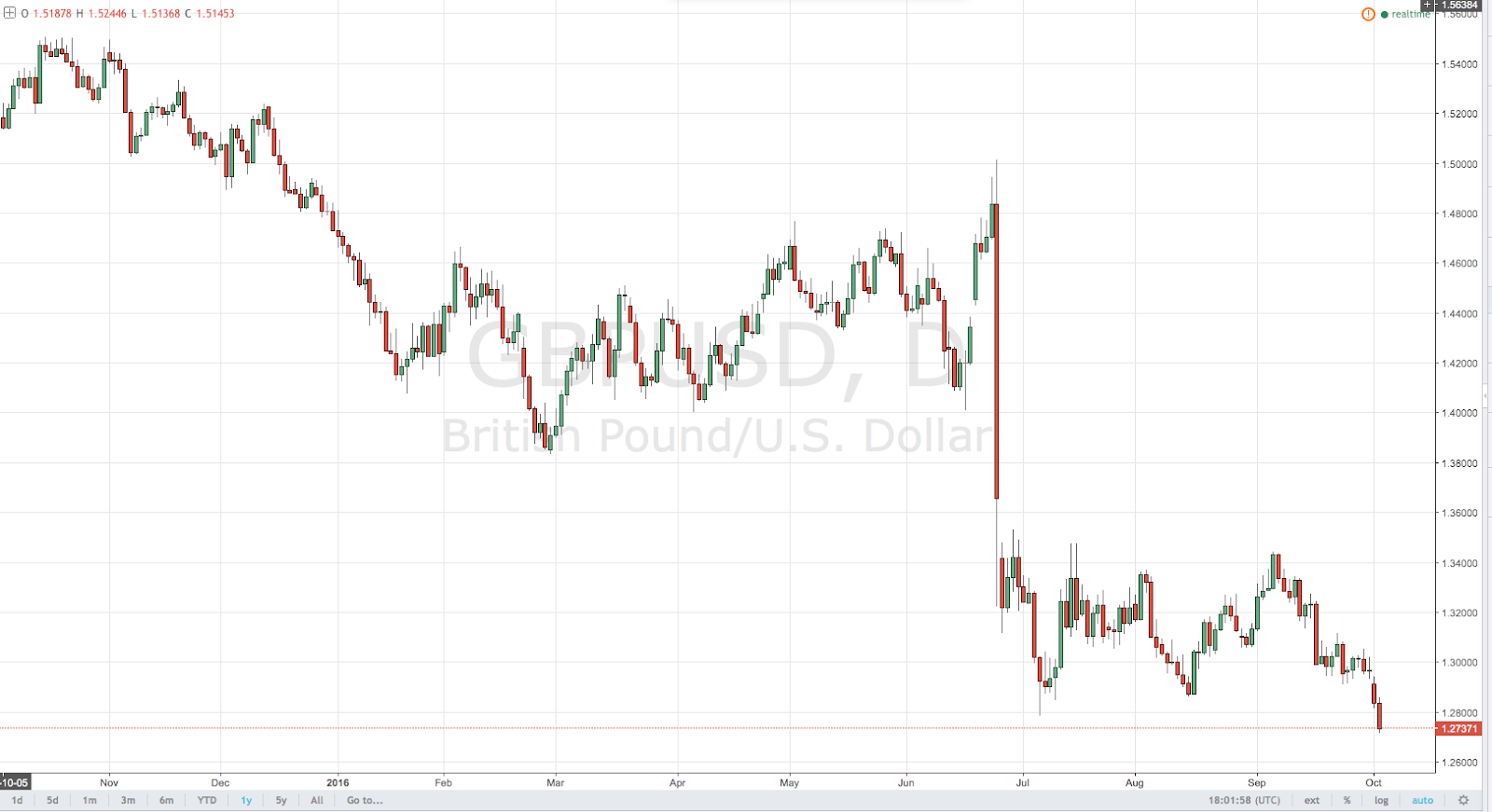
Based on looking at this chart, you can see exactly what price this specific currency was traded at for every day in the last year. Now here is another chart that is marked up with some key levels for the same currency.
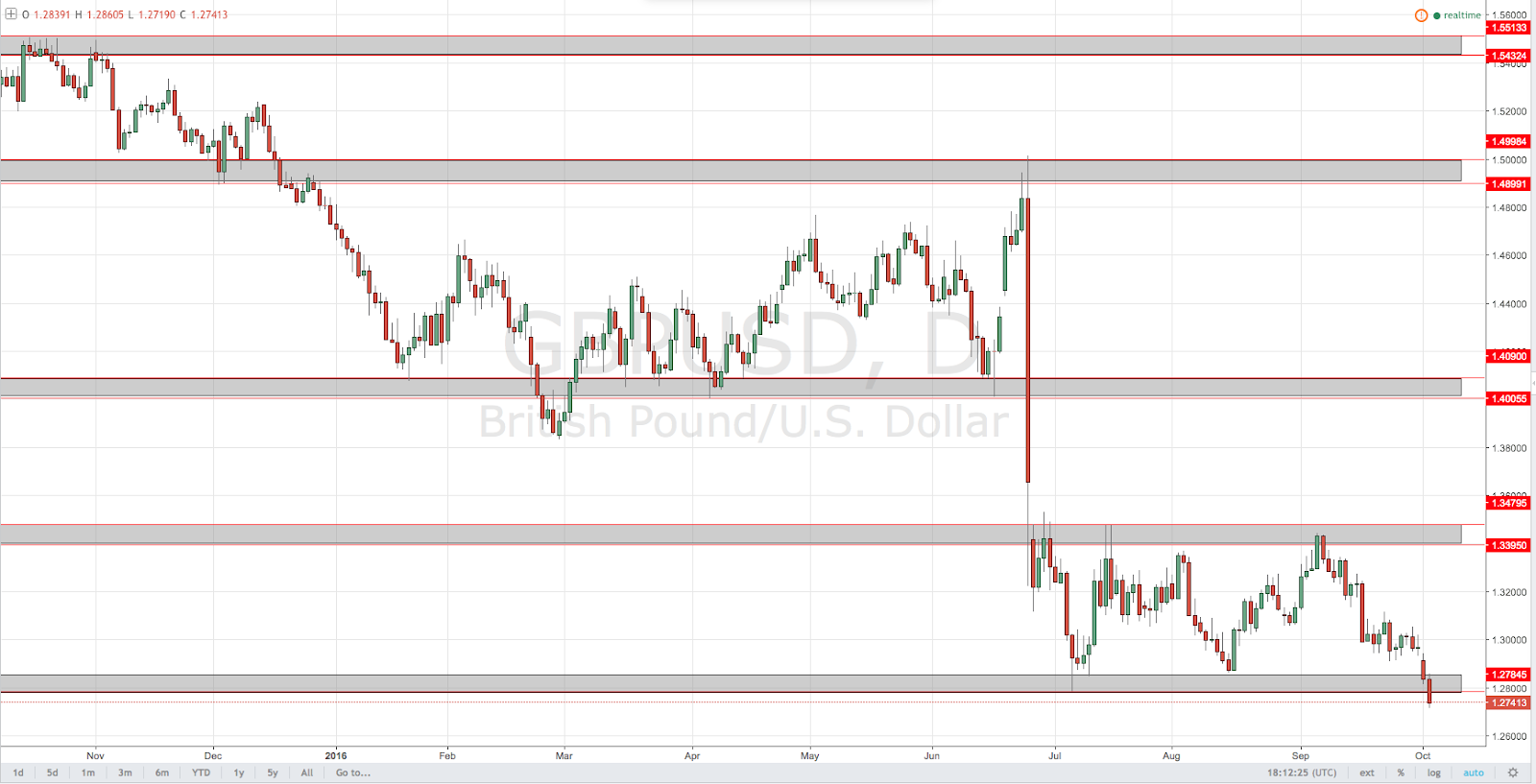
This is called support and resistance, also know as supply and demand levels. As you can see in the second image, there is much more structure to the market and you can see different levels that were tested more than once.
There are three different sections of technical analysis
- Trend analysis - The long term and short term market patterns. As a trader you never want to go against a big trend. You need to look at higher time frame charts like the weekly chart, rather than the one minute chart to find these long term trends.
- Key levels - There are many key levels like highs and lows, support and resistance, and Fibonacci levels.
- Indicators - There are hundreds of indicators to choose from. These indicators use different combinations of past price levels and reflect onto your chart whether the currency price is bullish or bearish.
3. Seasonality
Forex traders use technicals and/or fundamental analysis when trading a specific country’s currency. Seasonal patterns also have an effect on price trends and can be used to predict a certain currency’s movement.
Seasonal patterns are something that affects any market. Not just currencies. It has to do with specific economic patterns of a country, particular industry, or a country that is a big agricultural exporter.
There is something called the “January Effect”. This is when stocks or currencies perform better between the end of December and very first week of January. At the end of the fourth quarter, in December, the dollar tends to weaken. Then right in the beginning of the first quarter, in January, the dollar tends to strengthen.
If the demand of Crude Oil increases at a certain time of the year, such as Spring when it is driving season. That potentially increases the demand for gasoline, because more people are using their cars to get out and go places. Canada is our largest importer of Crude Oil in the United States. So that could also artificially create a demand for that currency.
There are also other seasonal market patterns that happen in certain countries that have large amounts of foreign workers that send money home to their families. This usually happens during the end of the year around December during holiday season.
Seasonal analysis looks at shifts in supply and demand. When the need for something goes up, the price goes up. When people stop buying certain things, the supply is reduced. This is seasonal trading. The factors you need to consider are:
- A country’s agricultural background
- Weather patterns
- Production cycles
- Consumer demand