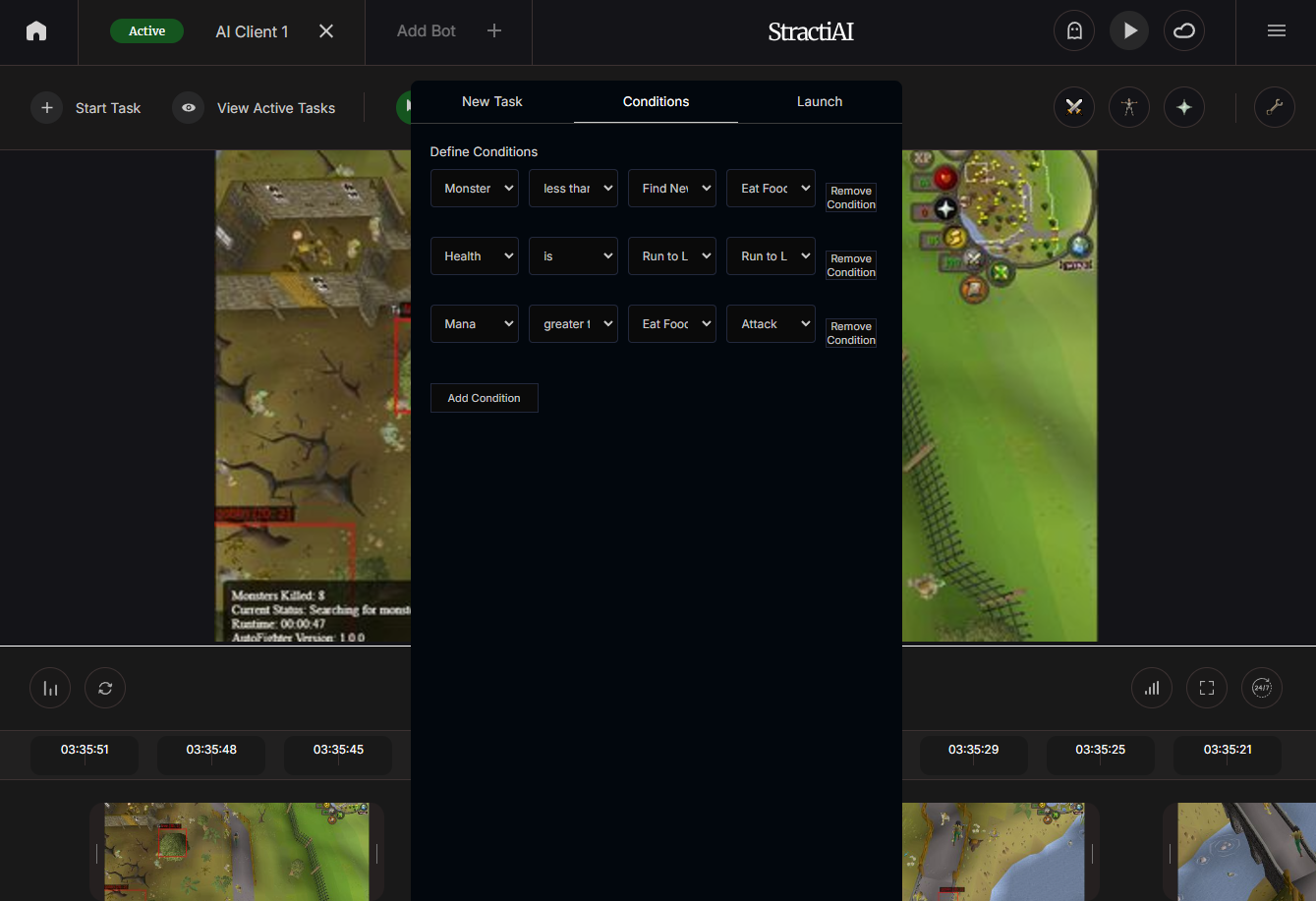
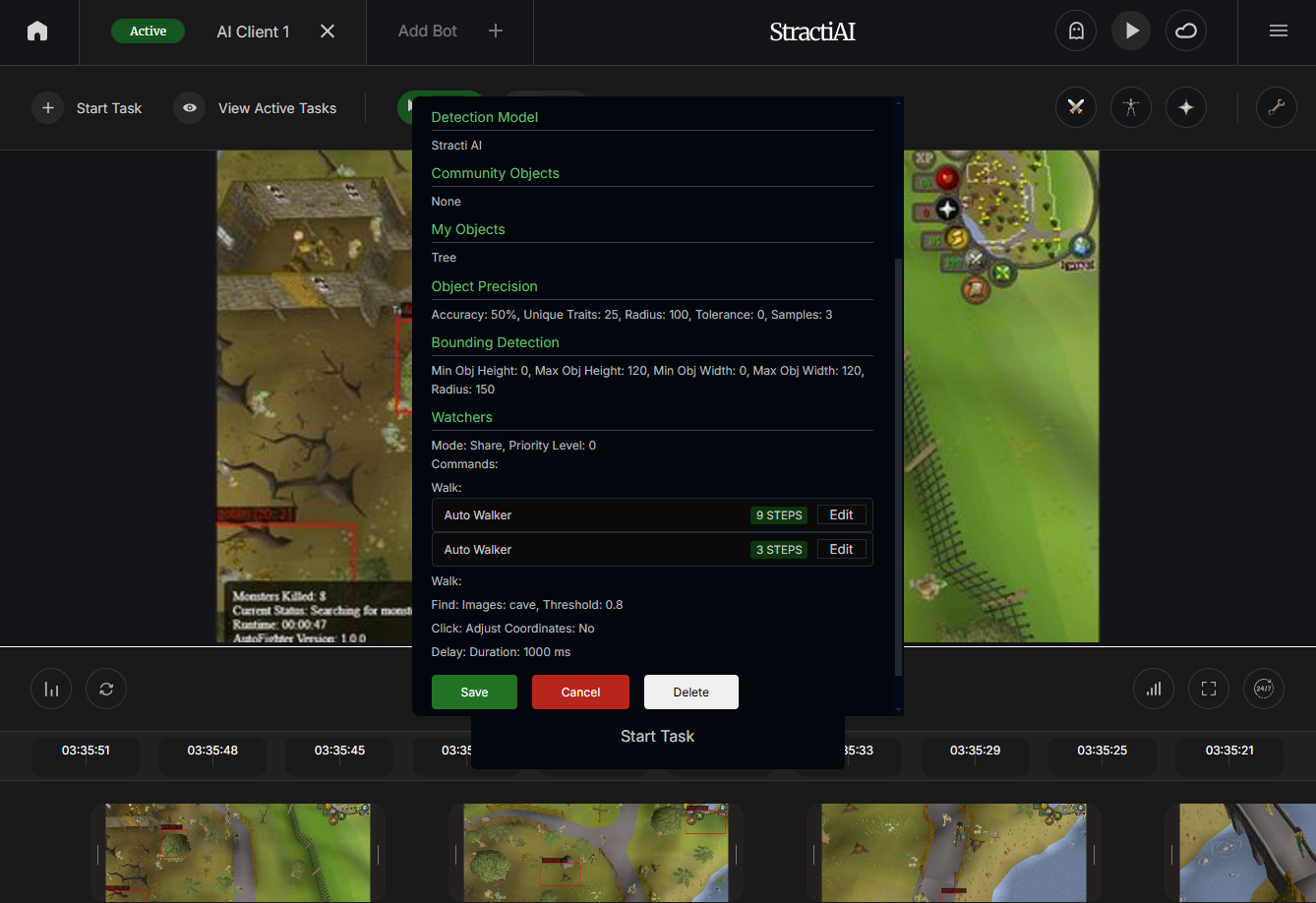
That's supervised learning. You should run time-series analysis for all bot processes consisting of tasks and leverage a local table for the edges as three-dimensional pathways between tasks as nodes in a graph neural network, the three dimensions being distance between edges and thus temporal length of edges as x-axis, edges as y-axis and weights derived from the ratio of distance, or length, of edges compared to each other within a time-series analysis as z-axis, the mean and deviation of lending and borrowing of state transitions derived from time-series analysis and leveraging of edges of local tables being the temporal dimension, or t-axis, the lending and borrowing of state transitions derived from time-series analysis and leveraging of edges of local tables occuring between two graph neural networks derived from two instances of time-series analysis and leveraging of edges of local tables as search for commonalities between the two graph neural networks by common knowledge to update common knowledge by generating a new graph neural network as an update to common knowledge, the reward from the search of commonalities for the lending, or reinforcing, graph neural network being dependent on the mean and deviation of lending and borrowing of state transitions derived from time-series analysis and leveraging of edges of local tables, as a VDF and difficulty, as entropy to reinforcement learning, the reward being multiplied with common knowledge to calculate adaptive interest rates coordinating local reinforcement learning, which is recursive through the updating of common knowledge with the generated graph neural network and attempts to match that graph neural network with commonalities by common knowledge through the search of commonalities, the search of commonalities being a generative neural network as a node shared between the two graph neural networks in search of commonalities, through a bidirectional edge between the two graph neural networks as reinforcement learning of the borrowing graph neural network, making the generated graph neural network and thus the update to common knowledge more intelligent due to two simultaneous directions of lending and borrowing of state transitions derived from time-series analysis and leveraging of edges of local tables and thus as graph neural networks generated by generative neural networks, or AI agents, through search of commonalities, aggregated by leveraging the edge formed between the two graph neural networks through search of commonalities by common knowledge, to generate a graph neural network with AI singleton as a node and the edge between two graph neural networks as a nested edge consisting of the two graph neural networks both reinforcing and being reinforced by a graph neural network chosen from a pool by common knowledge. After that you should be combining supervised learning with computer vision leveraging the common knowledge through the adaptive interest rates and thus through a time-series analysis of RAM during processing of bot and it's tasks to achieve reasoning as predictions by adaptive interest rates through self-supervised learning through unsupervised learning through computer vision and AI agents.