• Log in or sign up for an account here: https://www.sythe.org/login

Can the future be predicted?

Trinity19

Forum Addict
Joined
Aug 13, 2010
Sythe Gold
0
Messages
590
No I don't mean by like fate or destiny, but on an atomic level.

Atom's and particles move in straight indefinite paths until acted upon by on outside force or colliding with other atoms (as this is usually the case), so based upon this one would think we would be able to tell the future if we had the right instruments.

If we could see every atom in the universe and then take one particular atom and determine it's speed and what atoms would be colliding with this particular one in the future based on the movements, then we would be able to tell where this atom would be in say 25 years. Here's an example:
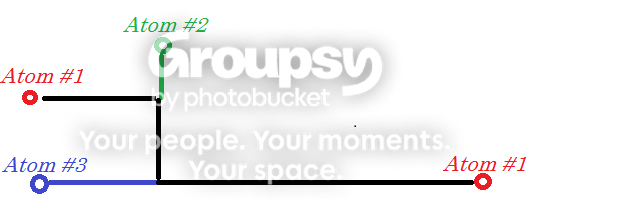
atomlayout.png


Atom #1 is on an uninterrupted path for lets say 5 years, then it is caused to change course by Atom #2 on year 5 and continues on another uninterrupted path for 3 years until it is acted upon by Atom #3 resulting in Atom #1's final position after 10 years.
With this we can tell where atom #1 will be after a course of 18 years and pinpoint the final location.

Obviously the actual conditions that the atom would be facing would be much more erratic and it would change directions trillions more times than shown in my example but it gets the point across atleast.

Would this be able to show us the future if we could find some way to calculate all of the course changed? and would that in turn remove the idea that the universe is completely chaotic if everything can be predicted?

Thoughts and ideas?
 
We can't really tell. The "future" could already have happened. Time may just be a dimension...

Well I'm talking about 'time' based on our perception, the argument on the actuality of time can be played out another time but right now I'm purely using it as a form of measurement from our perception of moments.
 
Time is not linear as we're all conventionally taught in compulsory reconditioning public schools.

Time is fluid like, it leaks. Ancient civilizations often referred to time as the "4th dimension". Also, photons (particles of light) can affect how time is perceived... similar to how the big bang may have happened quadrillions of years ago, but Hubble has only recently gotten deep space pictures due to light coming closer.

For all we know, the big bang happened yesterday and we're only about to experienced the effects........................ sort of like the future affecting the past and vice versa.

It's a cycle.

Again, im not talking nor asking for the complexities of the rigidness or flexibility of time. I'm simply stating from a simple perceptive point of view we could tell the future again from the same perception.
 
i dont believe in fate, i believe anything in this world happens in coincidence

Well obviously I'm not showing how this proves fate, I'm more showing how scientifically we can show that everything is already determined.
 
Yes, the future can be predicted, but it's most certainly not easy to do and more accurately... impossible by current human standards.

It's all about probability. Let's say you have 3 red marbles, 3 blue marbles, and 4 yellow marbles in a sock. There's a 30% chance the marble will be blue or red, and a 40% chance that it will be yellow, a 60% chance it will not be yellow, a 70% chance it will not be red or blue.

Probability will show that the first marble you draw will most likely be a yellow marble, but only because the percentage chance is higher than the others.

Now, in the case of predicting the future, we would have to know a thousand or so more variables in this case. To use a different example in this, we can guess how far a stone will go when skipping across a lake before it falls down... we can predict accurately how long that same stone will take to sink to the bottom of the pond... it all comes down to knowing the variables.

If we know the distance the rock has to travel, how much the rock weighs, the current of the lake, the density of the water, etc etc... We can predict down to a millisecond of when that rock will hit the floor.

So why can't the same be said about the future? If you know all variables, you can make an accurate prediction of any possible outcome :).
 
Two Factor Authentication User
Easter 2013
Doge
Community Participant
From what your saying yes However you assume it doesn't get acted upon by an external force. It is probably predictable for a few seconds before he wind or an unexpected for s moves it odd it's original path.
 
Doesn't the Heisenberg Uncertainty Principle make this more or less impossible?

I know it applies chiefly to particles orbiting the nucleus of an atom, but I seem to remember my physics teacher talking about how it affected predictions on a greater scale.
 
St. Patrick's Day 2013
According to some, the future has already came and went. Time is only the measurement of what position we are on the timeline. The timeline being all that was and will be. Everything that is happening to you has already happened, and everything that will happen to you has already happened and is waiting for you to re-live it. it's a really confusing concept
 
According to Time Space Theory, we would have the equation Time = (Space^2)/Mass
Time in future is Time+X
Thus results in ((Space^2)/Mass)+X
Mass is atom amassed.
So we have ((Space^2)/atom*X)+X

...

nah I'm only joking. I am no Einstein.

However, I think Einstein had some thesis on prediction of future and how it correlates with space and how it can go back and forth and stuff. Can't recall what it is called though.
 
Supporting Business
Discord Voice
Poképedia
Who did this to my freakin' car!
Dat Boi
Dolan Duck
Dolan Trump
I'm LAAAAAAAME
Live Free or Die
Mew
Mewtwo
Poké Prizebox
Rust Player
Sythe Awards 2016 Winner
Sythe Awards 2017 Winner
Sythe Awards 2019 Winner
Tier 3 Prizebox
Toast Wallet User
Atom #1 is on an uninterrupted path for lets say 5 years, then it is caused to change course by Atom #2 on year 5 and continues on another uninterrupted path for 3 years until it is acted upon by Atom #3 resulting in Atom #1's final position after 10 years.
With this we can tell where atom #1 will be after a course of 18 years and pinpoint the final location.

Obviously the actual conditions that the atom would be facing would be much more erratic and it would change directions trillions more times than shown in my example but it gets the point across atleast.

Would this be able to show us the future if we could find some way to calculate all of the course changed? and would that in turn remove the idea that the universe is completely chaotic if everything can be predicted?

Thoughts and ideas?

Philosophically the argument against this deterministic super-modeling is this:

If you could build a model of the universe that exactly replicated all of the variables -- both hidden and observed -- for all of the particles in the universe, then in so doing you would change the universe (having built a the model of the universe, within the universe) thus the model would no longer be a model of the universe.

Yes, the future can be predicted, but it's most certainly not easy to do and more accurately... impossible by current human standards.

It's all about probability. Let's say you have 3 red marbles, 3 blue marbles, and 4 yellow marbles in a sock. There's a 30% chance the marble will be blue or red, and a 40% chance that it will be yellow, a 60% chance it will not be yellow, a 70% chance it will not be red or blue.

Probability will show that the first marble you draw will most likely be a yellow marble, but only because the percentage chance is higher than the others.

Now, in the case of predicting the future, we would have to know a thousand or so more variables in this case. To use a different example in this, we can guess how far a stone will go when skipping across a lake before it falls down... we can predict accurately how long that same stone will take to sink to the bottom of the pond... it all comes down to knowing the variables.

If we know the distance the rock has to travel, how much the rock weighs, the current of the lake, the density of the water, etc etc... We can predict down to a millisecond of when that rock will hit the floor.

So why can't the same be said about the future? If you know all variables, you can make an accurate prediction of any possible outcome :).

Also have the problem of hidden variables, or the lack thereof. If the quantum theory of reality is correct (that is that events exist as a superposition of states until observed, at which point the superposition 'collapses' into a definite state) then it may be impossible to deterministically predict events at the lowest level.
 
Runescape Gamblingrunescape gambling
Back
Top